Field Brome
/
(Bromus arvensis)
Field Brome (Bromus arvensis)
/


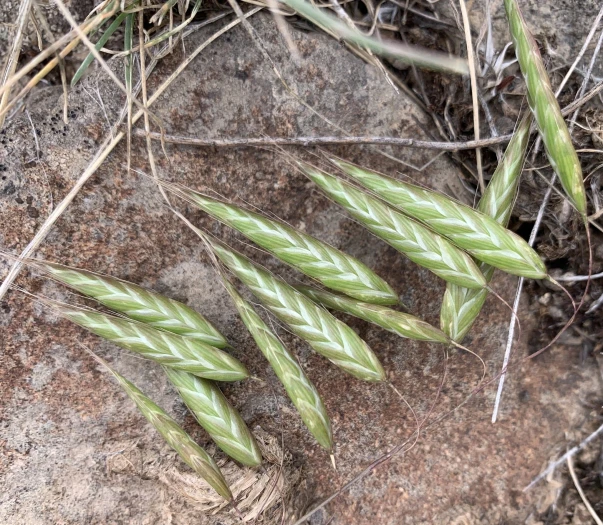

© mark-groeneveld
CC BY 4.0

Image By:
© mark-groeneveld
Recorded By:
Copyright:
CC BY 4.0
Copyright Notice:
Photo by: © mark-groeneveld | License Type: CC BY 4.0 | License URL: http://creativecommons.org/licenses/by/4.0/ | Uploader: mark-groeneveld | Publisher: iNaturalist |


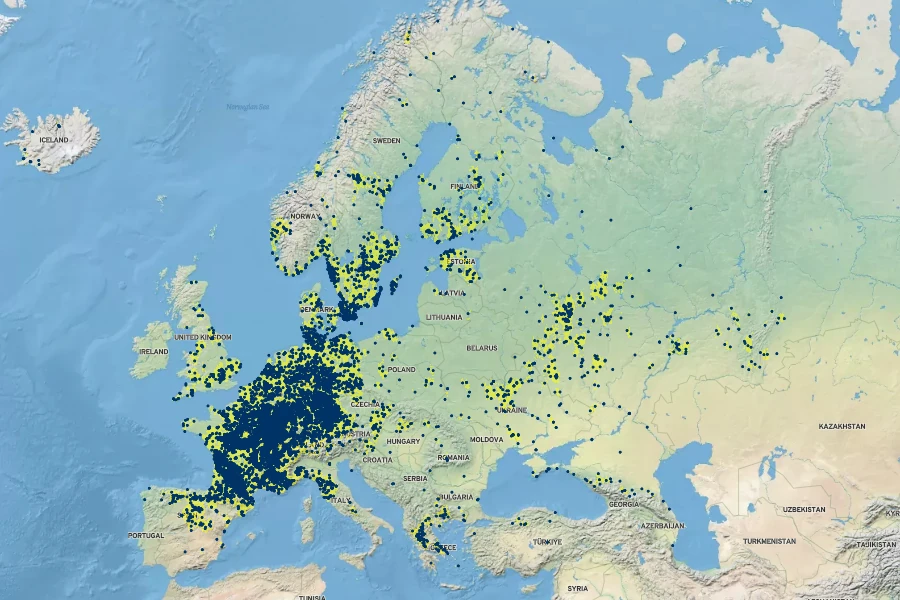



Summary
Bromus arvensis, commonly known as field brome, is an annual or biennial grass that originates from Europe and Asia but has since naturalized in temperate regions worldwide, including North America. It typically grows 1-3 feet tall and has an extensive fibrous root system. Field brome is often found in disturbed sites, field margins, and along roadsides where it can quickly colonize open areas. In its native habitat, it is adapted to a range of soil types and can tolerate a degree of drought.
Field brome is not commonly cultivated for ornamental purposes due to its invasive nature in some regions. However, it can be used for erosion control or as a temporary ground cover in agricultural settings. It prefers full sun to partial shade and can grow in a variety of soil conditions, but it thrives in well-drained soils. Gardeners should exercise caution and consult local regulations before planting, as it can become invasive and outcompete native vegetation.CC BY-SA 4.0
Field brome is not commonly cultivated for ornamental purposes due to its invasive nature in some regions. However, it can be used for erosion control or as a temporary ground cover in agricultural settings. It prefers full sun to partial shade and can grow in a variety of soil conditions, but it thrives in well-drained soils. Gardeners should exercise caution and consult local regulations before planting, as it can become invasive and outcompete native vegetation.CC BY-SA 4.0
Plant Description
- Plant Type: Grass
- Height: 1.5-3 feet
- Width: 1-2 feet
- Growth Rate: Rapid
- Flower Color: N/A
- Flowering Season: Spring
- Leaf Retention: Deciduous
Growth Requirements
- Sun: Full Sun, Part Shade
- Drainage: Medium, Slow
Common Uses
Erosion Control, Low Maintenance
Natural Habitat
Disturbed sites, field margins, and along roadsides
Other Names
Common Names: Japanese Chess, Japan Brome
Scientific Names: Bromus arvensis, Avena arvensis, Bromus arvensis f. compactus, Bromus arvensis f. degener, Bromus arvensis f. degeneri, Bromus arvensis f. diffusus, Bromus arvensis f. divergens, Bromus arvensis f. flavescens, Bromus arvensis f. laxus
GBIF Accepted Name: Bromus arvensis