Tar Vine
/
(Boerhavia coccinea)
Tar Vine (Boerhavia coccinea)
/


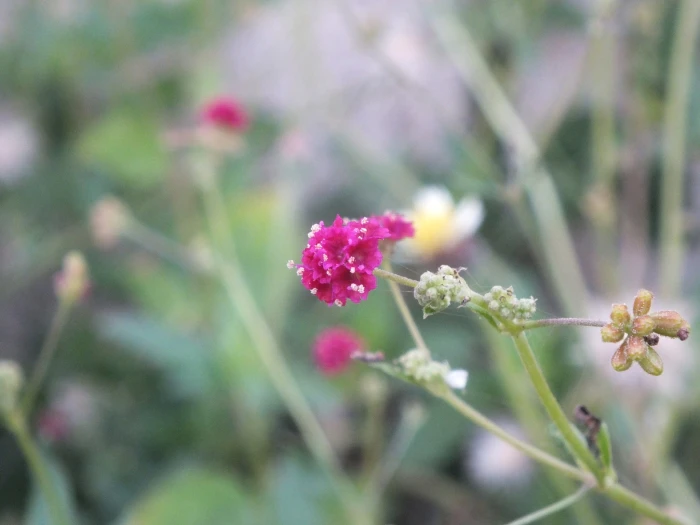

Lsf
CC BY 4.0

Image By:
Lsf
Recorded By:
Copyright:
CC BY 4.0
Copyright Notice:
Photo by: Lsf | License Type: CC BY 4.0 | License URL: http://creativecommons.org/licenses/by/4.0/ | Rights Holder: Lsf | Publisher: iNaturalist | Date Created: 2018-08-09T07:42:44-07:00 |





Summary
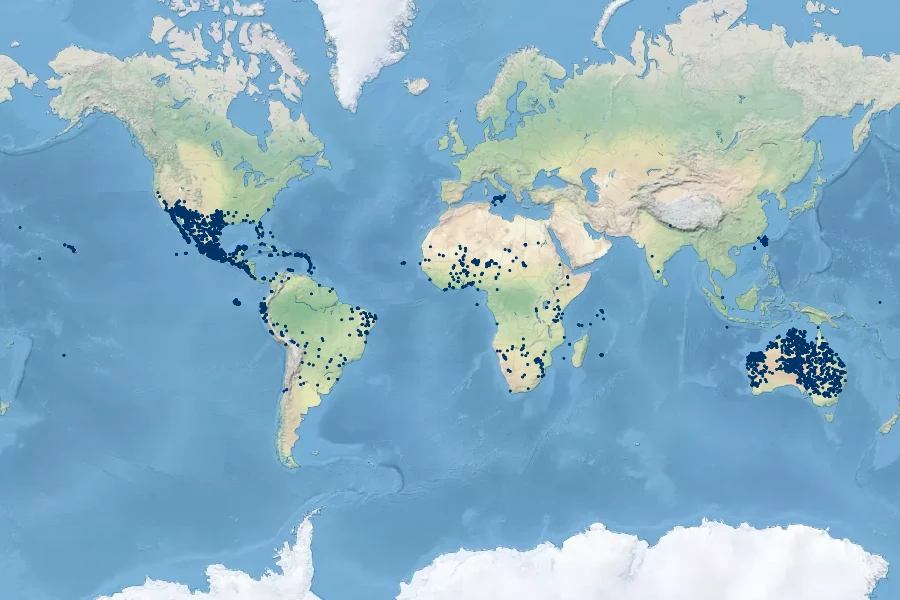
Boerhavia coccinea, commonly known as tar vine or scarlet spiderling, is a perennial herb native to arid and semi-arid regions, including parts of the Americas, Africa, the Arabian Peninsula, the Indian subcontinent, and Australia. It often thrives in disturbed areas such as roadsides and wastelands. This plant typically sprawls across the ground with stems that can exceed a meter in length. The stems are somewhat hairy and sticky, which helps the plant adhere to other vegetation. The leaves are oval-shaped, and the plant produces small, frilly flowers that are often bright scarlet to red-violet, adding a splash of color to its surroundings. Flowering occurs throughout the warm season, depending on the local climate.
Boerhavia coccinea is valued for its medicinal properties in several cultures, where it is used to treat a variety of ailments. It is also consumed as a leafy vegetable and used as animal fodder, making it a versatile plant in regions where it grows. In cultivation, it requires minimal care, thriving in full sun and tolerating a range of soil types, provided they are well-drained. While not commonly cultivated in gardens, it can be used as ground cover in xeriscaping or naturalized areas. Gardeners should be aware that in some regions, it may become weedy and potentially invasive. It has been found to become invasive in many regions worldwide, with range expansion noted in Australia.CC BY-SA 4.0
Boerhavia coccinea is valued for its medicinal properties in several cultures, where it is used to treat a variety of ailments. It is also consumed as a leafy vegetable and used as animal fodder, making it a versatile plant in regions where it grows. In cultivation, it requires minimal care, thriving in full sun and tolerating a range of soil types, provided they are well-drained. While not commonly cultivated in gardens, it can be used as ground cover in xeriscaping or naturalized areas. Gardeners should be aware that in some regions, it may become weedy and potentially invasive. It has been found to become invasive in many regions worldwide, with range expansion noted in Australia.CC BY-SA 4.0
Plant Description
- Plant Type: Herb
- Height: 0.5-1.5 feet
- Width: 1-2 feet
- Growth Rate: Moderate
- Flower Color: Pink, Purple, Red, White
- Flowering Season: Spring, Summer, Fall
- Leaf Retention: Evergreen
Growth Requirements
- Sun: Full Sun
- Drainage: Medium, Fast
Common Uses
Bee Garden, Butterfly Garden, Drought Tolerant, Erosion Control, Low Maintenance
Natural Habitat
Native to arid and semi-arid regions including parts of the Americas, Africa, the Arabian Peninsula, the Indian subcontinent, and Australia
Other Names
Common Names: Scarlet Spiderling, Red Spiderling, Hogweed, Hogweed (Lesser Antilles), Mata Pavo, Viscid Hog-Weed, Red Boerhavia, Hong Xi Xin
Scientific Names: Boerhavia coccinea, Boerhavia adscendens var. pubescens, Boerhavia bracteata, Boerhavia caribaea, Boerhavia coccinea f. parcehirsuta, Boerhavia coccinea var. paniculata, Boerhavia coccinea var. pubescens, Boerhavia coccinea var. viscosa, Boerhavia diandra
GBIF Accepted Name: Boerhavia coccinea