Mule Fat
/
(Baccharis salicifolia)
Mule Fat (Baccharis salicifolia)
/


NatureShutterbug
CC BY 2.0

Image By:
NatureShutterbug
Recorded By:
Copyright:
CC BY 2.0
Copyright Notice:
Photo by: NatureShutterbug | License Type: CC BY 2.0 | License URL: https://creativecommons.org/licenses/by/2.0/ | Uploader: NatureShutterbug | Publisher: Flickr





Summary
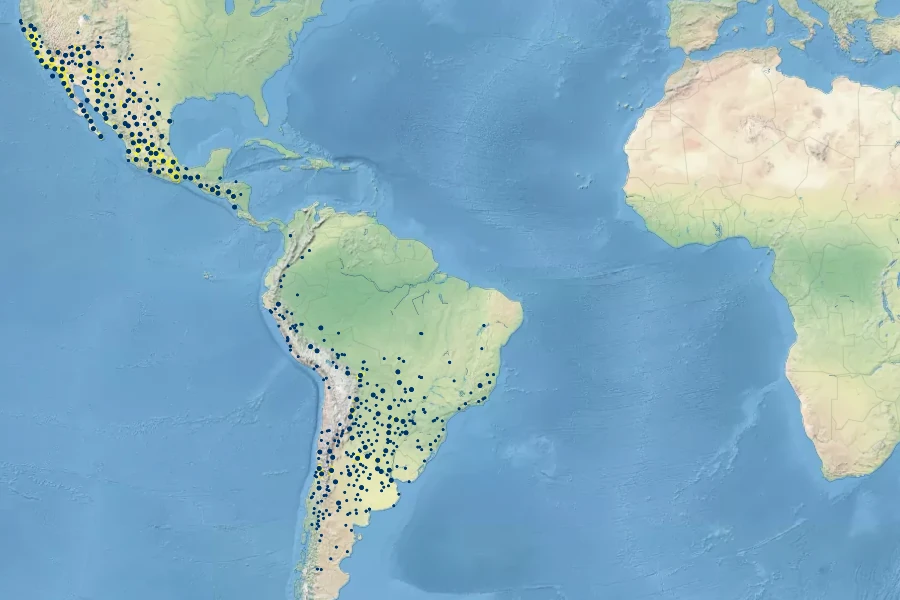
Baccharis salicifolia, commonly known as Mule Fat, is a deciduous shrub native to riparian zones, wetlands, and other moist areas in the southwestern United States, northern Mexico, and parts of Central and South America. It is also found in coastal sage scrub communities, which are characterized by a mix of shrubs and herbaceous plants adapted to dry summers and wet winters. This shrub typically grows to a height of 3-12 feet (1-4 meters) with a similar spread, and it has an open, irregular form with long, pointed leaves that may be toothed and feature three prominent lengthwise veins. The foliage is sticky to the touch. From late winter to early spring, Baccharis salicifolia produces abundant small, fuzzy flowers that are pink or red-tinged white, highly attractive to butterflies and other pollinators.
The plant is valued for its wildlife benefits, particularly as a nectar source for butterflies. It is used in restoration projects, for erosion control, and in naturalistic garden settings. Mule Fat thrives in full sun to part shade and prefers medium water, making it suitable for water-wise gardens when established. It is adaptable to various soil types, provided they have good drainage. While it is not known for significant disease problems, it should be monitored for spread outside its native range.CC BY-SA 4.0
The plant is valued for its wildlife benefits, particularly as a nectar source for butterflies. It is used in restoration projects, for erosion control, and in naturalistic garden settings. Mule Fat thrives in full sun to part shade and prefers medium water, making it suitable for water-wise gardens when established. It is adaptable to various soil types, provided they have good drainage. While it is not known for significant disease problems, it should be monitored for spread outside its native range.CC BY-SA 4.0
Plant Description
- Plant Type: Shrub
- Height: 6-12 feet
- Width: 3-9 feet
- Growth Rate: Rapid
- Flower Color: N/A
- Flowering Season: Spring, Summer, Fall
- Leaf Retention: Evergreen
Growth Requirements
- Sun: Full Sun, Part Shade
- Drainage: Fast
Common Uses
Bee Garden, Bird Garden, Butterfly Garden, Drought Tolerant, Erosion Control, Low Maintenance, Street Planting
Natural Habitat
native to riparian zones, wetlands, and other moist areas in the southwestern United States, northern Mexico, and parts of Central and South America
Other Names
Common Names: seepwillow, water-wally
Scientific Names: Baccharis salicifolia, Baccharis caerulescens, Baccharis linifolia, Baccharis salicifolia var. salicifolia, Baccharis pallida, Baccharis viminea var. viminea, Baccharis marginalis var. caerulescens, Baccharis salicifolia subsp. multibraceata, Baccharis corymbosa, Baccharis marginalis var. longipes
GBIF Accepted Name: Baccharis salicifolia (Ruiz & Pav.) Pers.