Drooping Flower Milkvetch
/
(Astragalus penduliflorus)
Drooping Flower Milkvetch (Astragalus penduliflorus)
/


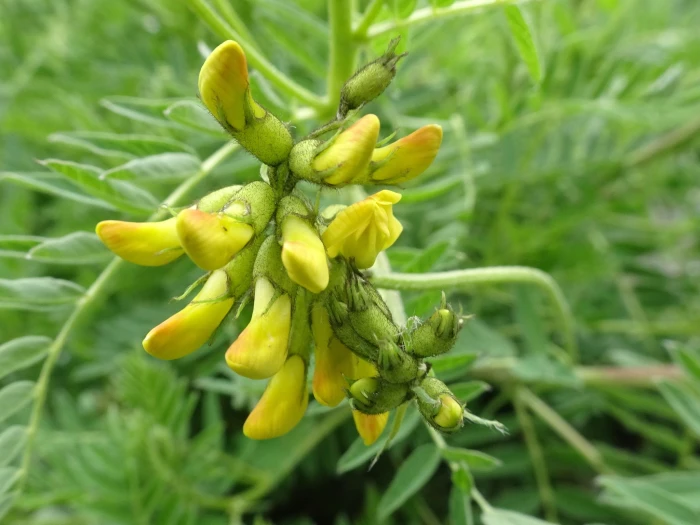

Thomas Koffel
CC BY 4.0

Image By:
Thomas Koffel
Recorded By:
Copyright:
CC BY 4.0
Copyright Notice:
Photo by: Thomas Koffel | License Type: CC BY 4.0 | License URL: http://creativecommons.org/licenses/by/4.0/ | Rights Holder: Thomas Koffel | Publisher: iNaturalist | Date Created: 2021-08-01T14:18:18-07:00 |





Summary
Astragalus penduliflorus, commonly known as the Drooping Flower Milkvetch, is a deciduous perennial herb native to Europe. It typically grows to a height of 10-30 cm and is characterized by its pinnate leaves and pendulous, yellow flowers that bloom in late spring to early summer. The flowers are modest in size but can be quite showy when the plant is in full bloom. This species is part of the Fabaceae family, which is known for its ability to fix nitrogen in the soil, thus improving soil fertility.
Drooping Flower Milkvetch is valued for its drought tolerance and ability to thrive in poor, well-drained soils, making it suitable for rock gardens and xeriscaping. It is also used in traditional medicine in its native region for various ailments. While it is not commonly found in cultivation, its resilience and attractive flowers make it an interesting choice for gardeners seeking unique plants for dry, sunny areas. It requires minimal maintenance once established, but gardeners should be aware that it may not tolerate wet or heavy soils. There are no widely known cultivars of this species in the horticultural trade. Potential problems include root rot if overwatered or planted in poorly drained soils.CC BY-SA 4.0
Drooping Flower Milkvetch is valued for its drought tolerance and ability to thrive in poor, well-drained soils, making it suitable for rock gardens and xeriscaping. It is also used in traditional medicine in its native region for various ailments. While it is not commonly found in cultivation, its resilience and attractive flowers make it an interesting choice for gardeners seeking unique plants for dry, sunny areas. It requires minimal maintenance once established, but gardeners should be aware that it may not tolerate wet or heavy soils. There are no widely known cultivars of this species in the horticultural trade. Potential problems include root rot if overwatered or planted in poorly drained soils.CC BY-SA 4.0
Plant Description
- Plant Type: Herb
- Height: 1-2 feet
- Width: 1-2 feet
- Growth Rate: Moderate
- Flower Color: Yellow
- Flowering Season: Spring, Summer
- Leaf Retention: Deciduous
Growth Requirements
- Sun: Full Sun
- Drainage: Medium
Common Uses
Bee Garden, Drought Tolerant, Low Maintenance
Natural Habitat
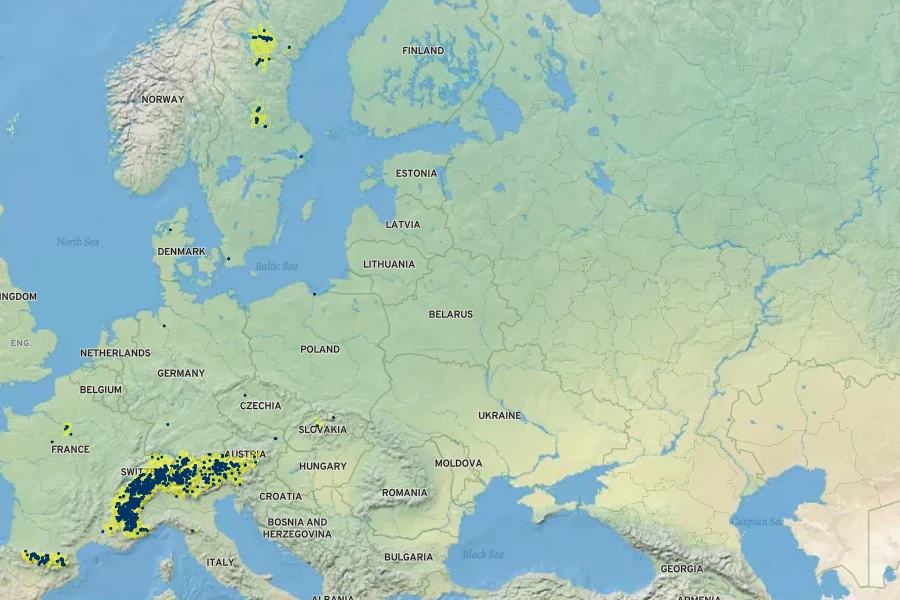
Native to Europe in rocky substrates and alpine meadows
Other Names
Common Names:
Scientific Names: Astragalus penduliflorus, Astragalus alpinus, Astragalus alpinus, Astragalus membranaceus f. pallidipurpureus, Astragalus mongolicus var. dahuricus, Astragalus penduliflorus f. microcarpus, Astragalus penduliflorus subsp. mongolicus, Astragalus ramosissimus, Colutea alpina, Colutea arborescens var. alpestris
GBIF Accepted Name: Astragalus penduliflorus