Blackstem Spleenwort
/
(Asplenium resiliens)
Blackstem Spleenwort (Asplenium resiliens)
/



Leila Dasher
CC BY 4.0

Image By:
Leila Dasher
Recorded By:
Copyright:
CC BY 4.0
Copyright Notice:
Photo by: Leila Dasher | License Type: CC BY 4.0 | License URL: http://creativecommons.org/licenses/by/4.0/ | Rights Holder: Leila Dasher | Publisher: iNaturalist | Date Created: 2018-03-24T12:09:48-07:00 |






Summary
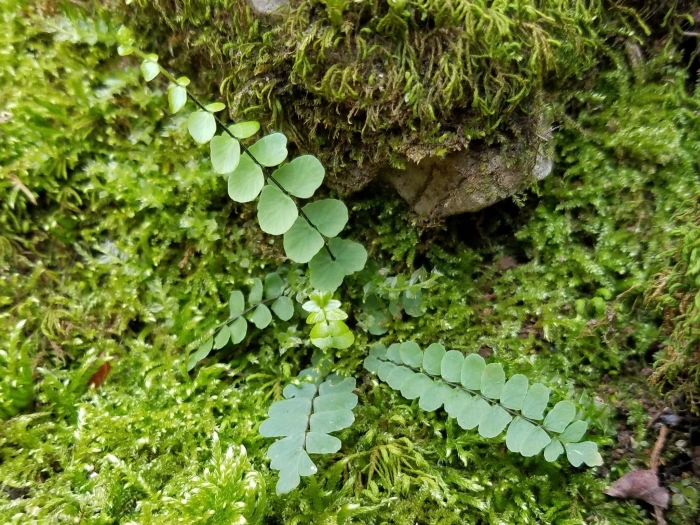
Asplenium resiliens, commonly known as blackstem spleenwort or little ebony spleenwort, is a perennial herbaceous fern native to rocky slopes, limestone outcrops, and shaded canyons in the southeastern United States, Mexico, as well as parts of Central and South America. It is characterized by its distinctive purplish-black stipe (stem) and rachis (central fern axis), with pinnate fronds that grow in erect tufts, forming dense clumps. The fronds vary in size from 3 to 45 centimeters (1.2 to 18 inches) long and from 0.5 to 2.5 centimeters (0.20 to 0.98 inches) wide, with a linear blade shape that may be slightly wider below the tip or just above the base.
This fern is appreciated for its resilience and adaptability, making it a suitable choice for shaded rock gardens, ferneries, and woodland plantings. It is cold-tolerant to USDA hardiness zone 6 and prefers moist conditions. Blackstem spleenwort thrives in part shade, requiring well-draining soils with a neutral to alkaline pH, often found in a basic potting mix. While it is not prone to many diseases, it can suffer from root rot if overwatered or planted in poorly draining soils.CC BY-SA 4.0
This fern is appreciated for its resilience and adaptability, making it a suitable choice for shaded rock gardens, ferneries, and woodland plantings. It is cold-tolerant to USDA hardiness zone 6 and prefers moist conditions. Blackstem spleenwort thrives in part shade, requiring well-draining soils with a neutral to alkaline pH, often found in a basic potting mix. While it is not prone to many diseases, it can suffer from root rot if overwatered or planted in poorly draining soils.CC BY-SA 4.0
Plant Description
- Plant Type: Fern
- Height: 0.7-0.8 feet
- Width: 0.8-1 feet
- Growth Rate: Moderate
- Flower Color: N/A
- Flowering Season: Non-Flowering
- Leaf Retention: Evergreen
Growth Requirements
- Sun: Part Shade
- Drainage: Medium, Fast
Common Uses
Low Maintenance, Potted Plant, Rock Garden
Natural Habitat
native to rocky slopes, limestone outcrops, and shaded canyons in the southeastern United States, Mexico, as well as parts of Central and South America
Other Names
Common Names: Little Ebony Spleenwort
Scientific Names: Asplenium resiliens, Asplenium parvulum, Asplenium lealii, Asplenium trichomanes subsp. anceps, Chamaefilix resiliens
GBIF Accepted Name: Asplenium resiliens Kunze