Sand Cress
/
(Arabidopsis lyrata)
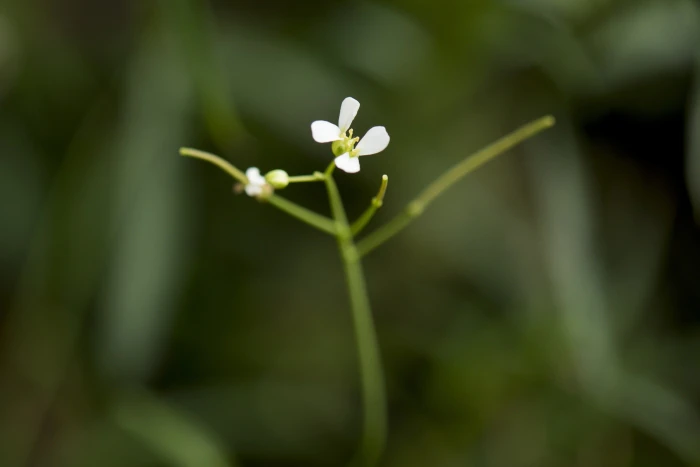
Sand Cress (Arabidopsis lyrata)
/



Licheng Shih
CC BY 4.0






Summary
Sand Cress is valued for its unique foliage and delicate flowers, making it suitable for rock gardens and naturalized areas. It is also used in ecological research due to its simple genome. The plant’s defense mechanisms, including glucosinolates and trichomes, deter insect herbivores. While it thrives in full sun, Sand Cress can also tolerate partial shade and is adaptable to various soil types with different drainage speeds, though it prefers well-drained conditions. It is relatively low maintenance. Gardeners should be aware that Arabidopsis lyrata can self-seed and spread if conditions are favorable, potentially becoming weedy in some situations.CC BY-SA 4.0
Plant Description
- Plant Type: Herb
- Height: 0.3-1.3 feet
- Width: 0.1-0.5 feet
- Growth Rate: Moderate
- Flower Color: White
- Flowering Season: Spring, Summer
- Leaf Retention: Deciduous
Growth Requirements
- Sun: Full Sun
- Drainage: Fast, Medium, Slow
Common Uses
Butterfly Garden, Low Maintenance, Potted Plant, Rock Garden
Natural Habitat
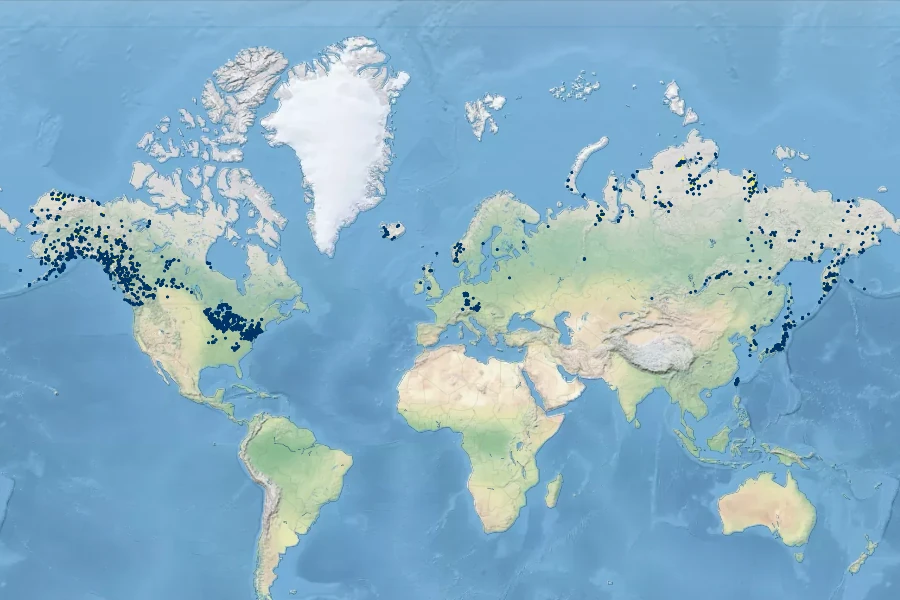
native to a variety of habitats including rocky and sandy soils, limestone glades, and open woodlands across the United States, particularly in the East Coast, Midwest, and parts of the Northwest
Other Names
Common Names: Rock Cress, Harp-Leaf Rockcress, Kamchatka Rockcress, Lyrate Rockcress, Lyre-Leaved Rockcress, Arabette Lyrée
Scientific Names: Arabidopsis lyrata, Arabis lyrata, Cardaminopsis lyrata, Arabis crantziana, Cardamine spathulata, Arabis petraea var. crantziana, Arabis lyrata f. parvisiliqua, Arabis arenosa subsp. petraea, Arabis lyrata var. typica, Arabis petraea var. nipponica
GBIF Accepted Name: Arabidopsis lyrata (L.) O’Kane & Al-Shehbaz