Granite Snapdragon
/
(Antirrhinum graniticum)
Granite Snapdragon (Antirrhinum graniticum)
/


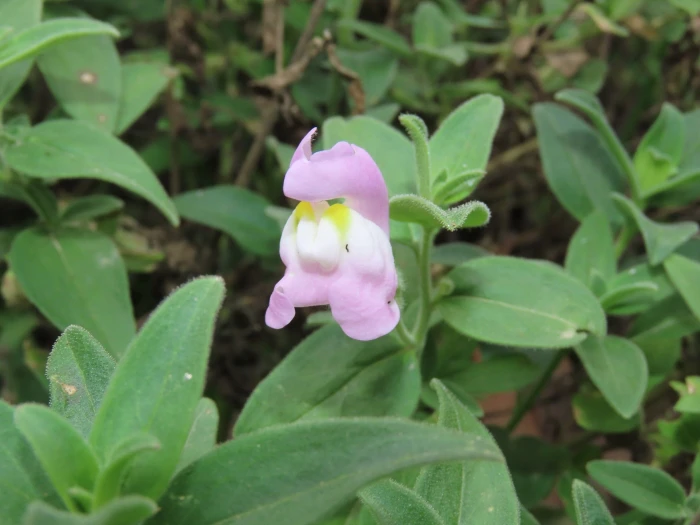

Juan C. Cepeda Espinosa
CC BY 4.0

Image By:
Juan C. Cepeda Espinosa
Recorded By:
Copyright:
CC BY 4.0
Copyright Notice:
Photo by: Juan C. Cepeda Espinosa | License Type: CC BY 4.0 | License URL: http://creativecommons.org/licenses/by/4.0/ | Rights Holder: Juan C. Cepeda Espinosa | Publisher: iNaturalist | Date Created: 2023-10-22T16:21:54-07:00 |





Summary
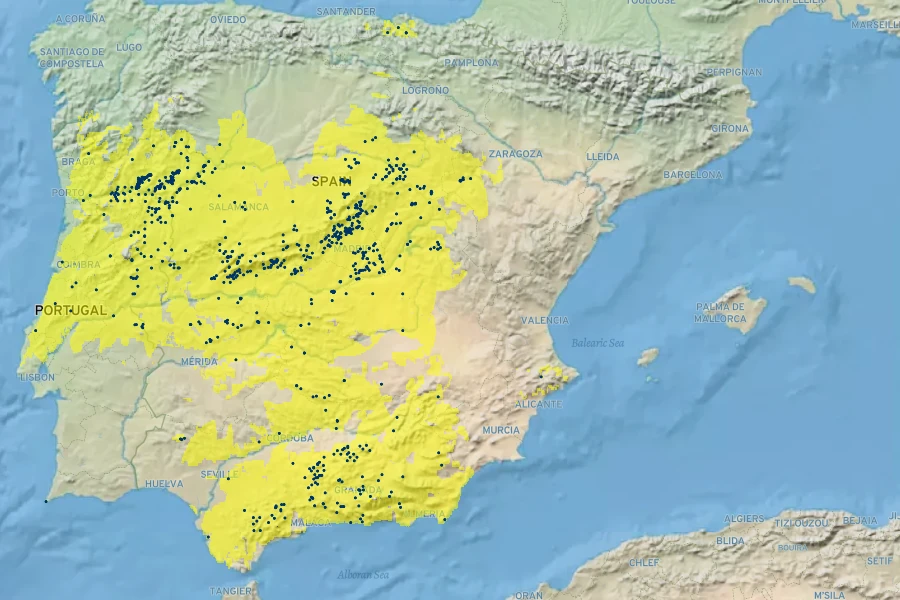
Antirrhinum graniticum, commonly known as Granite Snapdragon, is a perennial herb native to the chaparral and open woodlands of the Iberian Peninsula. It thrives in its native habitat, which includes rocky or sandy soils often associated with granite outcrops. This plant exhibits a moderate growth rate and typically reaches a height of 1-2 feet (0.3-0.6 meters) with a width of 0.5-1 feet (0.2-0.3 meters). The Granite Snapdragon is characterized by its upright form and lance-shaped leaves. Its yellow flowers, which bloom profusely in the spring and summer, are arranged in dense terminal spikes and are quite showy, attracting pollinators such as bees and butterflies.
In the garden, Granite Snapdragon is valued for its drought tolerance and its ability to thrive in poor soils, making it an excellent choice for xeriscaping and rock gardens. It is also used in border plantings and as a ground cover. Gardeners appreciate its low water requirements and its preference for full sun, which makes it suitable for sunny, dry areas. While it does best in fast-draining sandy soils, it can adapt to various soil types as long as they are well-drained. There are no major disease problems associated with this plant, but it can be susceptible to root rot if overwatered. It is not known for aggressive roots.CC BY-SA 4.0
In the garden, Granite Snapdragon is valued for its drought tolerance and its ability to thrive in poor soils, making it an excellent choice for xeriscaping and rock gardens. It is also used in border plantings and as a ground cover. Gardeners appreciate its low water requirements and its preference for full sun, which makes it suitable for sunny, dry areas. While it does best in fast-draining sandy soils, it can adapt to various soil types as long as they are well-drained. There are no major disease problems associated with this plant, but it can be susceptible to root rot if overwatered. It is not known for aggressive roots.CC BY-SA 4.0
Plant Description
- Plant Type: Herb
- Height: 1-2 feet
- Width: 0.5-1 feet
- Growth Rate: Moderate
- Flower Color: Yellow
- Flowering Season: Spring, Summer
- Leaf Retention: Semi-deciduous
Growth Requirements
- Sun: Full Sun
- Drainage: Fast
Common Uses
Border Plant, Butterfly Garden, Low Maintenance, Rock Garden
Natural Habitat
Native to open woodlands with rocky or sandy soils often associated with granite outcrops
Other Names
Common Names:
Scientific Names: Antirrhinum graniticum, Antirrhinum boissieri, Antirrhinum graniticum subsp. boissieri, Antirrhinum graniticum subsp. brachycalyx, Antirrhinum hispanicum subsp. graniticum, Antirrhinum hispanicum var. glabrescens, Antirrhinum hispanicum var. latifolium
GBIF Accepted Name: Antirrhinum graniticum