Dwarf Apple
/
(Angophora hispida)
Dwarf Apple (Angophora hispida)
/


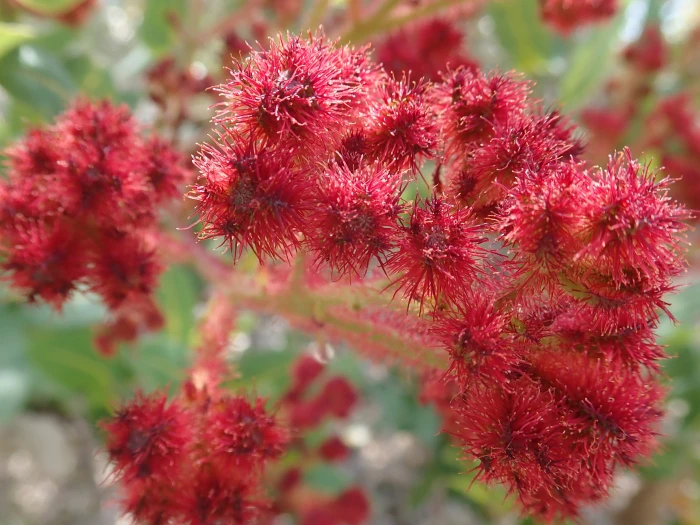

MargaretRDonald
CC BY-SA 4.0

Image By:
MargaretRDonald
Recorded By:
Copyright:
CC BY-SA 4.0
Copyright Notice:
Photo by: MargaretRDonald | License Type: CC BY-SA 4.0 | License URL: https://creativecommons.org/licenses/by-sa/4.0 | Uploader: MargaretRDonald | Publisher: Wikimedia Commons | Title: Angophora_hispida_Buds_44670772685_d40aeff6c8_o.jpg | Notes: {{english}} Corossol (''Annona muricata''). Photograph taken ''Jardin d'Éden'' botanical park, Saint-Gilles les Bains ([[Saint-Paul, Réunion|commune of Saint-Paul]]), [[Réunion|Réunion Island]] (Indian Ocean, a part of the French





Summary
Angophora hispida, commonly known as Dwarf Apple, is an evergreen tree or mallee native to the sandy soils of coastal and sub-coastal districts in New South Wales, Australia. It typically grows to a height of 7 m (25 ft) and has a distinctive appearance with its greyish, flaky bark and new growth covered in reddish hairs. The Dwarf Apple blooms from November to January, showcasing showy, creamy-white flower heads that are terminal and umbellate. Each head consists of three to seven flowers on pedicels, which branch off from a longer peduncle. After flowering, the plant produces cup-shaped woody seed pods that release brown, flat seeds in late summer.
The Dwarf Apple is valued for its ornamental features, including its vibrant red new growth and abundant white flowers that attract colorful beetles. It is a suitable choice for larger gardens and can be used as a feature tree or for naturalistic plantings. This species thrives in full sun and requires good, medium- to fast-draining soils. While it is generally low-maintenance, it can be susceptible to leaf spot and other fungal diseases in humid conditions. Gardeners should be aware that the Dwarf Apple’s roots can be aggressive, so it should be planted away from structures and pipes.CC BY-SA 4.0
The Dwarf Apple is valued for its ornamental features, including its vibrant red new growth and abundant white flowers that attract colorful beetles. It is a suitable choice for larger gardens and can be used as a feature tree or for naturalistic plantings. This species thrives in full sun and requires good, medium- to fast-draining soils. While it is generally low-maintenance, it can be susceptible to leaf spot and other fungal diseases in humid conditions. Gardeners should be aware that the Dwarf Apple’s roots can be aggressive, so it should be planted away from structures and pipes.CC BY-SA 4.0
Plant Description
- Plant Type: Tree
- Height: 15-21 feet
- Width: 9-15 feet
- Growth Rate: Moderate
- Flower Color: Cream, White
- Flowering Season: Spring, Winter
- Leaf Retention: Evergreen
Growth Requirements
- Sun: Full Sun
- Drainage: Medium, Fast
Common Uses
Erosion Control, Low Maintenance, Showy Flowers
Natural Habitat
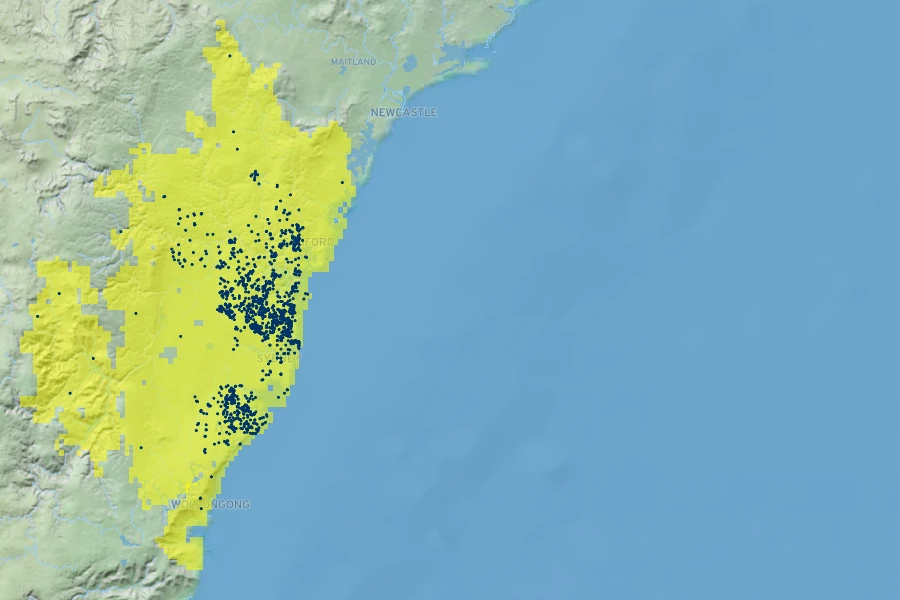
Sandy soils of coastal and sub-coastal districts in New South Wales, Australia
Other Names
Common Names: Dwarf-Apple, Smooth-Barked Apple
Scientific Names: Angophora hispida, Angophora cordifolia, Metrosideros anomala, Metrosideros cordifolia, Metrosideros hispida, Angophora cordata, Eucalyptus hispida, Eucalyptus hirsuta, Metrosideros hirsuta
GBIF Accepted Name: Angophora hispida (Sm.) Blaxell