Bagana In Sidamo
/
(Amorphophallus abyssinicus)
Bagana In Sidamo (Amorphophallus abyssinicus)
/


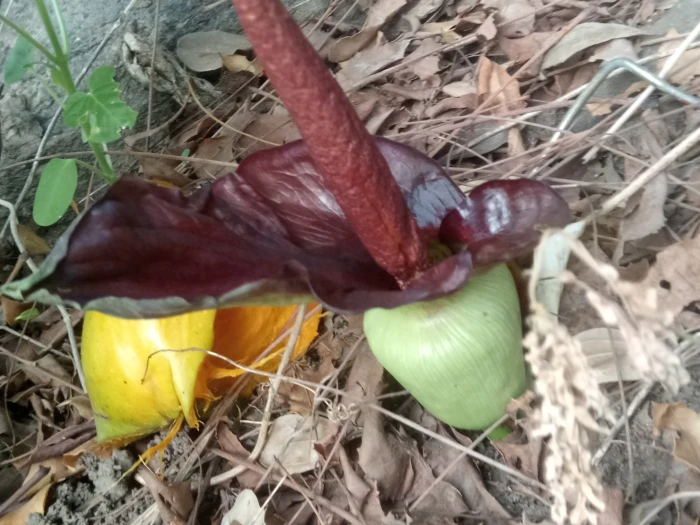

Lucky Atabo Okpanachi
CC BY 4.0

Image By:
Lucky Atabo Okpanachi
Recorded By:
Copyright:
CC BY 4.0
Copyright Notice:
Photo by: Lucky Atabo Okpanachi | License Type: CC BY 4.0 | License URL: http://creativecommons.org/licenses/by/4.0/ | Rights Holder: Lucky Atabo Okpanachi | Publisher: iNaturalist | Date Created: 2021-05-02T18:14:43-07:00 |





Summary
Amorphophallus abyssinicus, commonly referred to as Bagana in Sidamo, is a perennial herbaceous plant native to the understory of montane forests in tropical Africa. It thrives at elevations between 4265-6562 feet above sea level. This species is characterized by a single, large, umbrella-like leaf that emerges from a tuberous rootstock. The plant is known for its inflorescence, which is a large spadix surrounded by a spathe, though it is not particularly showy and blooms infrequently. The tuberous roots are a vital food source in its native region, where they are harvested and cooked for an extended period before consumption to remove any toxins.
Amorphophallus abyssinicus is not commonly cultivated outside its native habitat, but it may be of interest to botanical gardens and collectors of unusual plants. In cultivation, it requires a shaded environment with well-drained, fertile soil. It is not drought-tolerant and prefers a humid climate similar to its native montane forests. While not widely used ornamentally, its unique appearance can add an exotic touch to a garden. Care should be taken when handling this plant, as all parts contain calcium oxalate crystals, which can irritate the skin and mucous membranes.CC BY-SA 4.0
Amorphophallus abyssinicus is not commonly cultivated outside its native habitat, but it may be of interest to botanical gardens and collectors of unusual plants. In cultivation, it requires a shaded environment with well-drained, fertile soil. It is not drought-tolerant and prefers a humid climate similar to its native montane forests. While not widely used ornamentally, its unique appearance can add an exotic touch to a garden. Care should be taken when handling this plant, as all parts contain calcium oxalate crystals, which can irritate the skin and mucous membranes.CC BY-SA 4.0
Plant Description
- Plant Type: Herb
- Height: 3-6 feet
- Width: 1-2 feet
- Growth Rate: Moderate
- Flower Color: Cream
- Flowering Season: Summer
- Leaf Retention: Deciduous
Growth Requirements
- Sun: Part Shade
- Drainage: Fast, Medium
Common Uses
Low Maintenance, Potted Plant
Natural Habitat
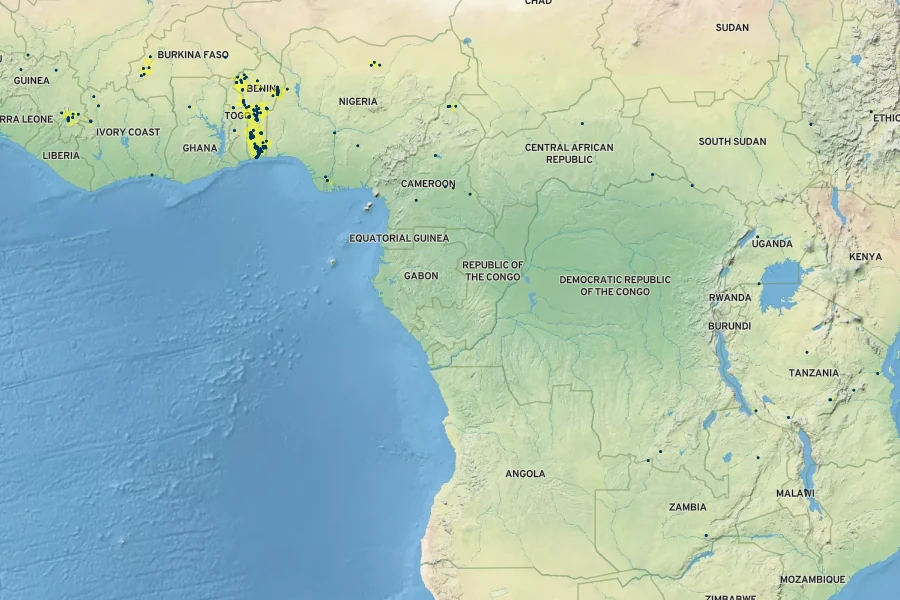
Understory of montane forests in tropical Africa
Other Names
Common Names: Abyssinian Konjac
Scientific Names: Amorphophallus abyssinicus, Amorphophallus unyikii, Arum abyssinicum, Hydrosme seretii
GBIF Accepted Name: Amorphophallus abyssinicus