Carolina Foxtail
/
(Alopecurus carolinianus)
Carolina Foxtail (Alopecurus carolinianus)
/


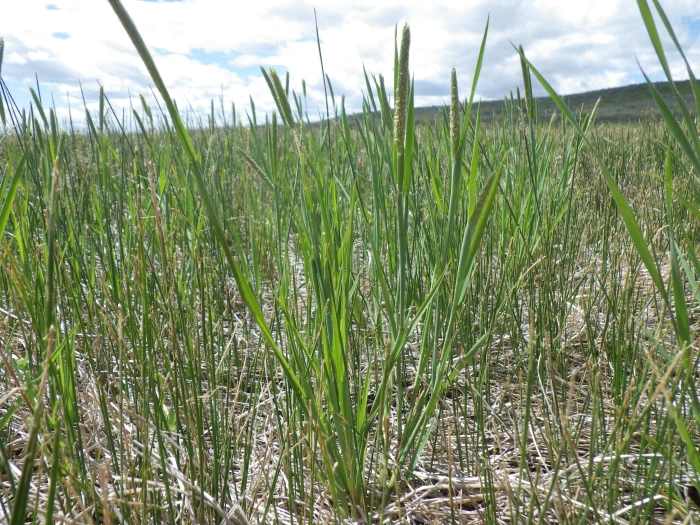

© Matt Lavin
CC BY 4.0

Image By:
© Matt Lavin
Recorded By:
Copyright:
CC BY 4.0
Copyright Notice:
Photo by: © Matt Lavin | License Type: CC BY 4.0 | License URL: http://creativecommons.org/licenses/by/4.0/ | Uploader: mattlavin | Publisher: iNaturalist |





Summary
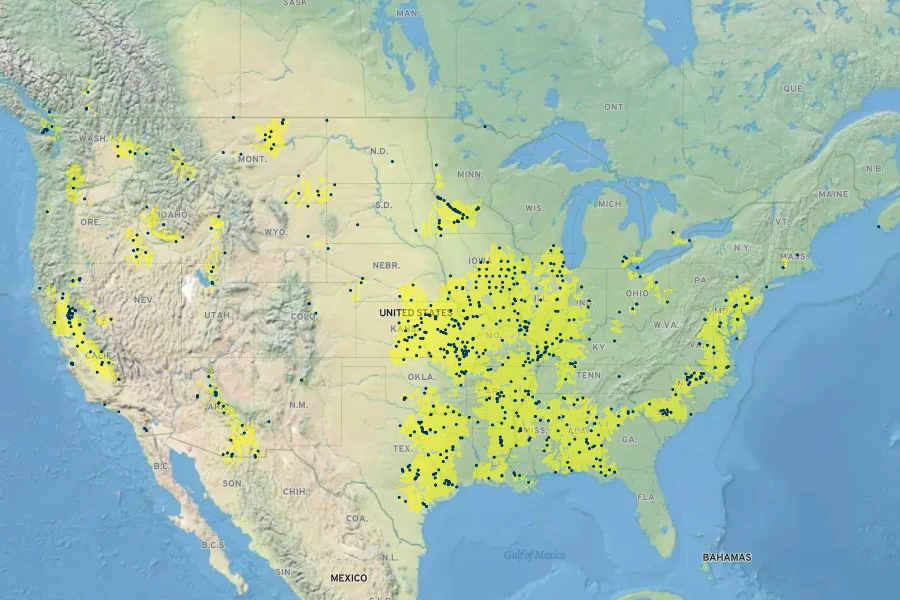
Alopecurus carolinianus, commonly known as Carolina foxtail or tufted foxtail, is an annual grass native to a variety of habitats including moist meadows, floodplains, and the edges of water bodies across North America, encompassing most of the United States and western Canada. It typically forms dense tufts with erect stems that can reach up to half a meter in height. The leaves are linear, measuring 3 to 6 inches in length. The inflorescence is a dense, cylindrical spike, blooming with yellow to bright orange anthers that are particularly noticeable during its flowering season in the spring.
Carolina foxtail is valued for its ability to thrive in wet conditions and is often used for soil stabilization and erosion control in riparian areas. It is also appreciated for its ornamental qualities, especially the showy inflorescences that add texture and color to garden settings. This grass prefers full sun to part shade and requires moist to wet soil conditions for optimal growth. While it is not typically grown for culinary or medicinal purposes, it can provide habitat for wildlife. One potential problem with Carolina foxtail is that it can become weedy in certain conditions, spreading rapidly and potentially outcompeting other plants.CC BY-SA 4.0
Carolina foxtail is valued for its ability to thrive in wet conditions and is often used for soil stabilization and erosion control in riparian areas. It is also appreciated for its ornamental qualities, especially the showy inflorescences that add texture and color to garden settings. This grass prefers full sun to part shade and requires moist to wet soil conditions for optimal growth. While it is not typically grown for culinary or medicinal purposes, it can provide habitat for wildlife. One potential problem with Carolina foxtail is that it can become weedy in certain conditions, spreading rapidly and potentially outcompeting other plants.CC BY-SA 4.0
Plant Description
- Plant Type: Grass
- Height: 0.5-1.5 feet
- Width: 0.5-1 feet
- Growth Rate: Moderate
- Flower Color: N/A
- Flowering Season: Spring, Summer
- Leaf Retention:
Growth Requirements
- Sun: Full Sun, Part Shade
- Drainage: Fast, Medium, Slow
Common Uses
Bank Stabilization, Erosion Control, Low Maintenance, Water Garden
Natural Habitat
Moist meadows, floodplains, and edges of water bodies across North America
Other Names
Common Names: Pinegrass, Tufted Meadow-Foxtail, Tufted Foxtail, Annual Foxtail, Meadow foxtail
Scientific Names: Alopecurus carolinianus, Alopecurus geniculatus var. caespitosus, Alopecurus geniculatus var. coespitosus, Alopecurus geniculatus var. ramosus, Alopecurus gracilis, Alopecurus gracilis, Alopecurus macounii, Alopecurus pedalis, Alopecurus pedalis
GBIF Accepted Name: Alopecurus carolinianus