Pink Silk Tree
/
(Albizia julibrissin)
Pink Silk Tree (Albizia julibrissin)
/


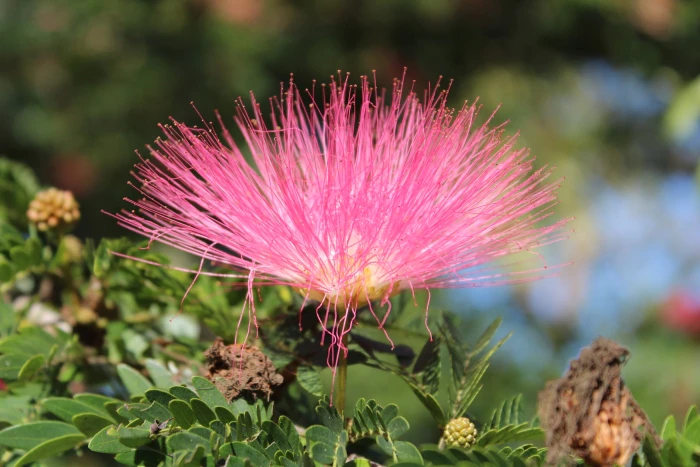

Taylo33p
CC BY-SA 4.0

Image By:
Taylo33p
Recorded By:
Copyright:
CC BY-SA 4.0
Copyright Notice:
Photo by: Taylo33p | License Type: CC BY-SA 4.0 | License URL: https://creativecommons.org/licenses/by-sa/4.0 | Uploader: Taylo33p | Publisher: Wikimedia Commons | Title: Albizia_julibrissin_flower.jpg | Notes: {{Information |Description ={{en|1=Location taken: Behnke Nurseries, Beltsville, MD USA. Names: Albizia odoratissima (L.f.)Benth., Albizia, Black Siris, Ceylon Rosewood, Kala Siri Classification: Plantae > Magnoliophyta > Magnoliopsida > Aste... |





Summary
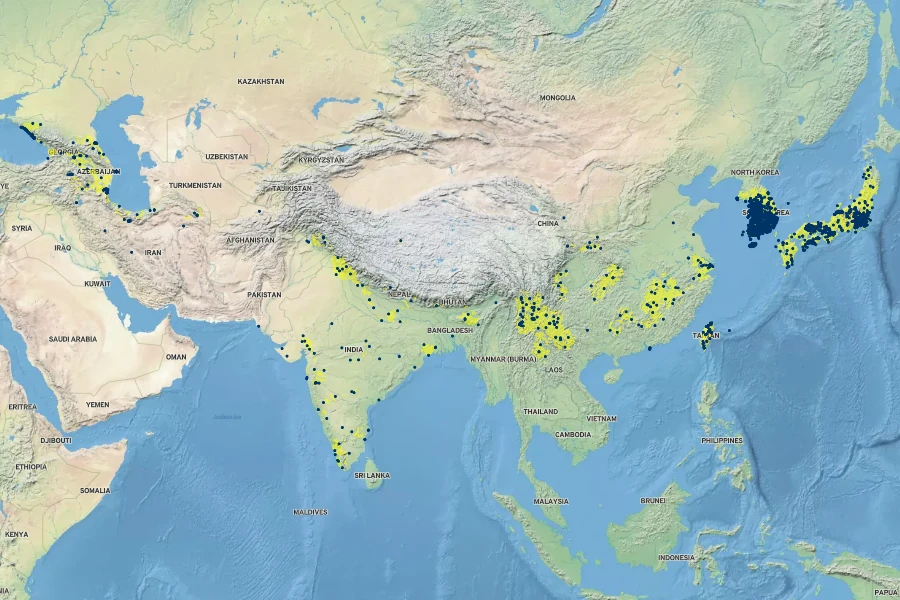
Albizia julibrissin, commonly known as Pink Silk Tree, is a deciduous tree native to a variety of habitats in East Asia, the Himalayas, and Western Asia, including open woodlands and forest edges. It typically grows to 5–16 m (16–52 ft) tall with a broad crown of level or arching branches. The bark is dark greenish-grey and becomes vertically striped with age. The large, frond-like leaves add to its fine leaf texture. Its flowers, which bloom throughout the summer, are dense inflorescences of pink silky threads with a white base, creating a starburst effect that is highly attractive to bees, butterflies, and hummingbirds. The tree is known for its fast growth rate and low water requirements, thriving in full sun in hot summer climates.
The Pink Silk Tree is valued for its ornamental qualities, including its attractive horizontal canopy and showy flowers. It is widely planted in parks and gardens, and its broad crown provides dappled shade, making it suitable for urban planting and as a shade tree. However, Albizia julibrissin can be invasive outside its native range. It is invasive across the eastern and southern United States, spreading rapidly via wind-dispersed seeds.CC BY-SA 4.0
The Pink Silk Tree is valued for its ornamental qualities, including its attractive horizontal canopy and showy flowers. It is widely planted in parks and gardens, and its broad crown provides dappled shade, making it suitable for urban planting and as a shade tree. However, Albizia julibrissin can be invasive outside its native range. It is invasive across the eastern and southern United States, spreading rapidly via wind-dispersed seeds.CC BY-SA 4.0
Plant Description
- Plant Type: Tree
- Height: 20-40 feet
- Width: 20-50 feet
- Growth Rate: Rapid
- Flower Color: Pink
- Flowering Season: Summer
- Leaf Retention: Deciduous
Growth Requirements
- Sun: Full Sun, Part Shade
- Drainage: Fast, Medium, Slow
Common Uses
Bank Stabilization, Bee Garden, Bird Garden, Butterfly Garden, Drought Tolerant, Fragrant, Hummingbird Garden, Showy Flowers
Natural Habitat
Open woodlands and forest edges, potential problem of mimosa wilt
Other Names
Common Names: Mimosa, Pink Siris, Silk Tree, Persian Silktree, Silktree Albizia, Powderpuff Tree, Mimosa-Tree, Varay-Cotton, Siris, Plenk Siris
Scientific Names: Albizia julibrissin, Albizzia julibrissin, Mimosa julibrissin, Acacia julibrissin, Albizia isembergiana, Feuilleea julibrissin, Sericandra julibrissin
GBIF Accepted Name: Albizia julibrissin Durazz.