Hooked Agrimony
/
(Agrimonia rostellata)
Hooked Agrimony (Agrimonia rostellata)
/


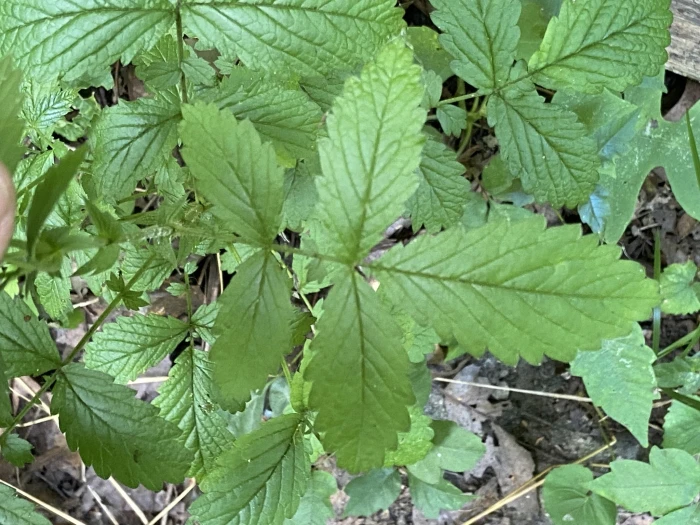

© Brian Finzel
CC BY-SA 4.0

Image By:
© Brian Finzel
Recorded By:
Copyright:
CC BY-SA 4.0
Copyright Notice:
Photo by: © Brian Finzel | License Type: CC BY-SA 4.0 | License URL: http://creativecommons.org/licenses/by-sa/4.0/ | Uploader: finzelflowers | Publisher: iNaturalist |



Summary
Agrimonia rostellata, commonly known as Hooked Agrimony, is a perennial herb native to a variety of habitats including open woodlands, thickets, and meadows in the eastern United States. It can reach up to 5 feet in height and is characterized by its pinnately compound leaves and elongated spikes of small, yellow flowers that bloom in the summer. The flowers are modest in size but can be quite showy when in full bloom due to their dense arrangement along the spike. The plant also produces bur-like fruits with hooked bristles that can attach to animal fur or clothing, aiding in seed dispersal.
Hooked Agrimony is valued for its ornamental qualities and its use in traditional herbal remedies. It is often used in naturalistic plantings and as part of pollinator-friendly gardens due to its attractiveness to bees and other insects. This species prefers partial shade to full sun, moist to well-drained soils, and is relatively low-maintenance once established. While not commonly found in cultivation, it can be a unique addition to a native plant garden or a medicinal herb collection. It is generally free from serious pests and diseases but can be susceptible to rust fungi. It does not have aggressive roots, making it a safe choice for most garden settings.CC BY-SA 4.0
Hooked Agrimony is valued for its ornamental qualities and its use in traditional herbal remedies. It is often used in naturalistic plantings and as part of pollinator-friendly gardens due to its attractiveness to bees and other insects. This species prefers partial shade to full sun, moist to well-drained soils, and is relatively low-maintenance once established. While not commonly found in cultivation, it can be a unique addition to a native plant garden or a medicinal herb collection. It is generally free from serious pests and diseases but can be susceptible to rust fungi. It does not have aggressive roots, making it a safe choice for most garden settings.CC BY-SA 4.0
Plant Description
- Plant Type: Herb
- Height: 1-3.3 feet
- Width: 2-3 feet
- Growth Rate: Moderate
- Flower Color: Yellow
- Flowering Season: Summer, Fall
- Leaf Retention: Deciduous
Growth Requirements
- Sun: Full Sun, Part Shade
- Drainage: Fast, Medium
Common Uses
Bee Garden, Low Maintenance
Natural Habitat
Open woodlands, thickets, and meadows
Other Names
Common Names: Woodland Agrimony, Woodland Groovebur
Scientific Names: Agrimonia rostellata, Agrimonia americana, Agrimonia americana, Agrimonia parviflora, Agrimonia striata, Eupatorium rostellatum
GBIF Accepted Name: Agrimonia rostellata