Toothed Pheasant’s Eye
/
(Adonis dentata)
Toothed Pheasant’s Eye (Adonis dentata)
/



Krzysztof Ziarnek, Kenraiz
CC BY-SA 4.0

Image By:
Krzysztof Ziarnek, Kenraiz
Recorded By:
Copyright:
CC BY-SA 4.0
Copyright Notice:
Photo by: Krzysztof Ziarnek, Kenraiz | License Type: CC BY-SA 4.0 | License URL: https://creativecommons.org/licenses/by-sa/4.0 | Uploader: Kenraiz | Publisher: Wikipedia Commons



Summary
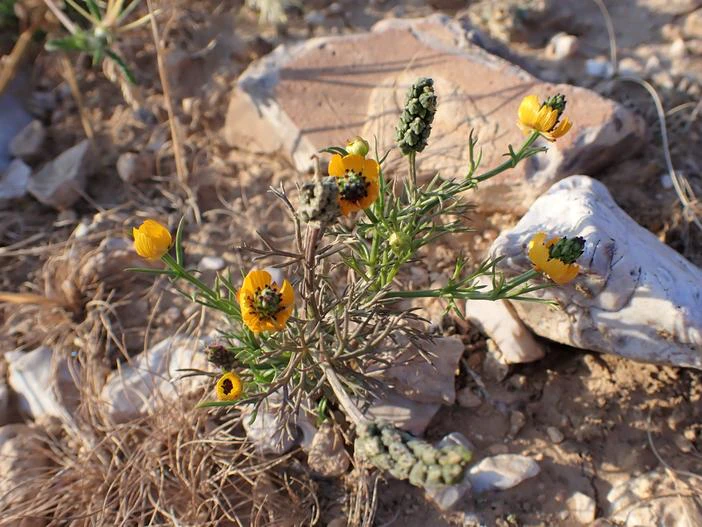
Adonis dentata, commonly known as Toothed Pheasant’s Eye, is a slow-growing perennial herb native to the Eastern Mediterranean region. It is typically found in dry grasslands, open pine forests, and rocky slopes, adapting well to the Mediterranean climate. This plant reaches a modest height and width of 0.5-1 feet (0.15-0.3 meters), forming a compact clump. The foliage is finely dissected, giving a feathery appearance, and the bright yellow flowers are quite showy, blooming in the spring and attracting pollinators.
Toothed Pheasant’s Eye is valued for its vibrant yellow flowers and delicate foliage, which can add texture and color to rock gardens, borders, and wildflower meadows. It is relatively low maintenance, requiring minimal care once established. Gardeners should be aware that all parts of the plant are toxic if ingested, and it should be handled with care due to its cardiotoxic compounds. It is drought-tolerant and prefers full sun exposure, thriving in well-drained soils such as clay, loam, or sandy types. While it needs medium amounts of water, overwatering should be avoided to prevent root rot.CC BY-SA 4.0
Toothed Pheasant’s Eye is valued for its vibrant yellow flowers and delicate foliage, which can add texture and color to rock gardens, borders, and wildflower meadows. It is relatively low maintenance, requiring minimal care once established. Gardeners should be aware that all parts of the plant are toxic if ingested, and it should be handled with care due to its cardiotoxic compounds. It is drought-tolerant and prefers full sun exposure, thriving in well-drained soils such as clay, loam, or sandy types. While it needs medium amounts of water, overwatering should be avoided to prevent root rot.CC BY-SA 4.0
Plant Description
- Plant Type: Herb
- Height: 0.5-1 feet
- Width: 0.5-1 feet
- Growth Rate: Slow
- Flower Color: Yellow
- Flowering Season: Spring
- Leaf Retention: Deciduous
Growth Requirements
- Sun: Full Sun
- Drainage: Fast
Common Uses
Border Plant, Low Maintenance, Rock Garden
Natural Habitat
Native to dry grasslands, open pine forests, and rocky slopes in the Eastern Mediterranean region
Other Names
Common Names:
Scientific Names: Adonis dentata, Adonis dentata var. genuina, Adonis dentata var. subinermis
GBIF Accepted Name: Adonis dentata